How does the Preamble of the Indian Constitution reflect the foundational principles enshrined in the Directive Principles of State Policy, and what implications does this linkage have on contemporary governance?
Analyze the connection between the Preamble’s commitment to justice, liberty, equality, and fraternity and their manifestation in key constitutional provisions such as Fundamental Rights and Fundamental Duties.
Explore the role of the Preamble in interpreting and resolving conflicts between fundamental rights, especially in the context of evolving societal norms and values.
Assess the impact of technological advancements on the interpretation of the Preamble’s commitment to securing justice, liberty, and equality, and its relevance to issues like privacy and digital rights.
Examine how the Preamble serves as a guiding principle for constitutional amendments, particularly in light of debates surrounding changes to the basic structure of the Constitution.
Investigate the relationship between the Preamble and the principles of federalism, evaluating how it influences the distribution of powers between the center and the states.
Analyze the role of the Preamble in shaping environmental jurisprudence and its connection to the constitutional mandate of securing justice, liberty, and equality for future generations.
Explore the Preamble’s significance in the context of social justice and affirmative action policies, examining how it informs the constitutional framework for reservations and inclusive governance.
Evaluate the evolving interpretation of the Preamble in the context of global human rights discourse and its impact on India’s stance on international treaties and conventions.
Examine the intersection of the Preamble’s ideals with contemporary issues such as climate change, artificial intelligence, and bioethics, and analyze how constitutional principles guide policymaking in these domains.
WE, THE PEOPLE OF INDIA, having solemnly resolved to constitute India into a SOVEREIGN SOCIALIST SECULAR DEMOCRATIC REPUBLIC and to secure to all its citizens:
JUSTICE, social, economic and political;
LIBERTY of thought, expression, belief, faith and worship;
EQUALITY of status and of opportunity;
and to promote among them all
FRATERNITY assuring the dignity of the individual and the unity and integrity of the Nation;
IN OUR CONSTITUENT ASSEMBLY this twenty-sixth day of November, 1949, do HEREBY ADOPT, ENACT AND GIVE TO OURSELVES THIS CONSTITUTION
added three words: socialist, secular and integrity
Intro is based on American consti.
preface
highlights most imp values
ideal
philosophy of authors
summary of law
Consti drafted on basis of objectives resolution (tabled in 1946)
Significance
source of power (the citizen)
nature of indian state
objective of consti
summary of consti
insight into philosophy of authors
mindset of consti makers
Very Detailed
We the ppl
written by people
indians free to choose their destiny and hold ultimate source of power
consti not imposed by external force; rather a gift by indian citizens to themselves
Nature of indian state
original SDR
socialist, secular added later (42^nd^ CA 1976)
republic - real power with citizens
Direct/ representative system
Referendum - seek ppl opinion on imp matters
Plebiscite - seek ppl opinion on matters of sovereignty and independence
Citizen’s initiative - citizens can initiate a move to introduce a law
Recall - recall of elected candidate
Aspects of democracy
Political - equal voting and political rights
Economic - equal opportunities to progress economically. No discrimination based on economic status
Social - all sections of society must be equal in social sphere; no discrimation based on social lev
Challenges to indian democracy
policies of govt influenced by corp, industrialist
compromised independence of media
money and musclepower in election
lack of equal opportunity to participate in political process
politics revolve around economic power
lack of internal party democracy
Sovereign
free from external control
Internal
power to take internal decisions
complete sovereignty is a myth
policies regulated acc to intl norms/bodies
WTO, IMF etc
eg. decision to open indian economy guided by IMF
External
diplomatic and foreign relations
freedom to be part of multilateral group or the way it should vote at intl forums
Socialist
capitalist - market forces at play; state only regulator
communist - no private ownership
Socialist falls in between
state controls majority production
private sector had small role to play earlier
Post 1991, major retreat of State ⇒ increased role of private sector
Initially not mentioned in consti as makers didn’t want to tie down future generations to specific eco system.
After 1991, role of private sector increased. Socialist no longer applies to india in original context.
SC stated socialism should be seen differently. State should take measures promoting welfare of citizens and prevent concentration of economic resources.
Seculaism
State shall not discriminate against any religion
no religion of state
right to choose faith
state may interfere for purpose of social welfare and reform
state shall try to prevent inter and intra religion domination
India wants to interfere in religious matters to end social evils. Indians free to choose their faith. Protection given to minorities. India is multireligious, came up with its own definition of secularism.
To achieve a peaceful coexistence of various communities
French secularism
extreme
Laicit
public officials prohibited from showing religious values, beliefs
private discouraged
2004, students banned from wearing overt signs/symbols to school
works only for homogenous society
isolation of religious minority
Objectives of Constitution
Equality
no discrimination
Justice
important for other objectives
Social Justice
absence of social classes and privileges
absence of discrimination based on RRCS
addresses historic injustice by making special provisions for weak and downtrodden
idea of redistribution of wealth and preventing concentration of wealth
Political Justice
equal opportunity for all to participate in political process
granting equal political right to all
Art 326 - voting rights
Equality of status, opportunity
equality → subset of justice
status - natural equality b/w all persons as free and equal citizens of india
opportunity - treat equally AND give level playing field to improve status
Liberty of thought and expression
liberty = freedom with certain degree of restraint
restraints should not be arbitrary
imp to protect everyone’s liberty
everyone has opportunity to grow to maximum possible extent
Liberty of thought and expression is cornerstone to any democratic society
Art 19(1)(A) - freedom of speech and expression in limited way
liberty of faith, belief and worship
Fraternity
oneness and spirit of brotherhood
common feeling of belonging to one nation
coexist peacefully
indian identity > religious, linguistic, community identity
no explicit provision; reflected in spirit of consti
Dignity
inherent respect a person deserves
supreme value in our freedom struggle
struggle aimed at claiming back our dignity
Art 17, 23
Unity and integrity
crucial for protecting above values
rights guaranteed only if nation exists
main theme of constitution is that individual exists because of nation and vice verse
integrity added with socialist and secular (42^nd^ CAA, 1976)
Preamble part of constitution?
Re: Berubari Union Case - not part of constitution, can’t be amended under Art 368
Keshavananda Bharti Case, 1973 - Preamble part of constitution. Can be amended.
Amendment must not alter basic structure of consti
Legal enforceability
Keshavananda Bharti Case - not legally enforceable
useful for understanding meaning of ambiguous provisions
How do the Fundamental Rights, particularly the right to equality, intersect with the principles of affirmative action, and what constitutional mechanisms exist to reconcile potential conflicts?
Analyze the relationship between the right to life and personal liberty and emerging challenges in the realm of bioethics, including issues such as assisted reproductive technologies and genetic engineering.
Examine the interplay between the right to freedom of speech and expression and the constitutional limitations imposed by defamation laws, exploring the balance between individual liberties and protection of reputation.
Assess the linkage between the right to education as a Fundamental Right and the concurrent responsibility of the state to ensure quality education, and analyze the implications for policy-making in the education sector.
Explore the relationship between the right to privacy and modern surveillance technologies, evaluating the constitutional safeguards in place and potential gaps in protecting individual privacy rights.
Analyze how the right against exploitation, particularly in the context of child labor and bonded labor, intersects with the Directive Principles of State Policy and shapes legislative and policy interventions.
Examine the constitutional implications of the right to property being transformed into a legal right, and its subsequent removal as a Fundamental Right, on economic policies and land acquisition laws.
Assess the intersection of the right to equality and the reservation policy, analyzing how it has evolved over time and its impact on social justice and representation in various sectors.
Explore the relationship between the right to constitutional remedies and the functioning of constitutional bodies, such as the Election Commission, and their role in upholding democratic principles.
Analyze the implications of the right to freedom of assembly and association on issues of public protest and dissent, considering the balance between individual rights and maintaining public order.
Article 12
Info
Def of State ⟹ Govt, Parl, SLA, LA, OA within Indian territory or in control of Indian territory
Local auth → General Clauses Act 1885
MCD, Panchayat, Cantonment Board
Other auth:
Uni of Madras v/s Shantabai 1954⟹ Uni not State hence FR limitations not applicable on Uni
26(a): establish, maintain insti for rel and charitable purposes
26(b): manage own affairs in matter of religion
26(c): own and acquire mov/immov property
26(d): administer such property in accordance with law
Article 27
Info
Freedom as to payment of taxes for promotion of any particular religion
Article 28
Info
Freedom to attend religious instruction / worship at certain EI
28(1): no religious inst at any EI wholly out State funds
28(2): EI under endowment or trust requiring rel inst may provide so
28(3): person at EI recognized by State or receiving aid out of State fund not forced to partake in rel worship / inst unless consent (person or guardian)
Aruna Roy v UoI: no prohibition on study of rel philosophy and culture. Comparative study important.
Article 29
Info
Protection of interest of minorities
29(1): any section of citizens with distinct language, script or culture has right to conserve the same
29(2): no citizen denied admission to EI maintained by State or State fund on grounds only of RRC+L (language)
Article 30
Info
Right of minorities to establish and administer EI
30(1): rel or lang minorities have right to est & administer EI
30(1A): what?
30(2): State shall not discriminate against EI when granting aid on basis of mgmnt of minority
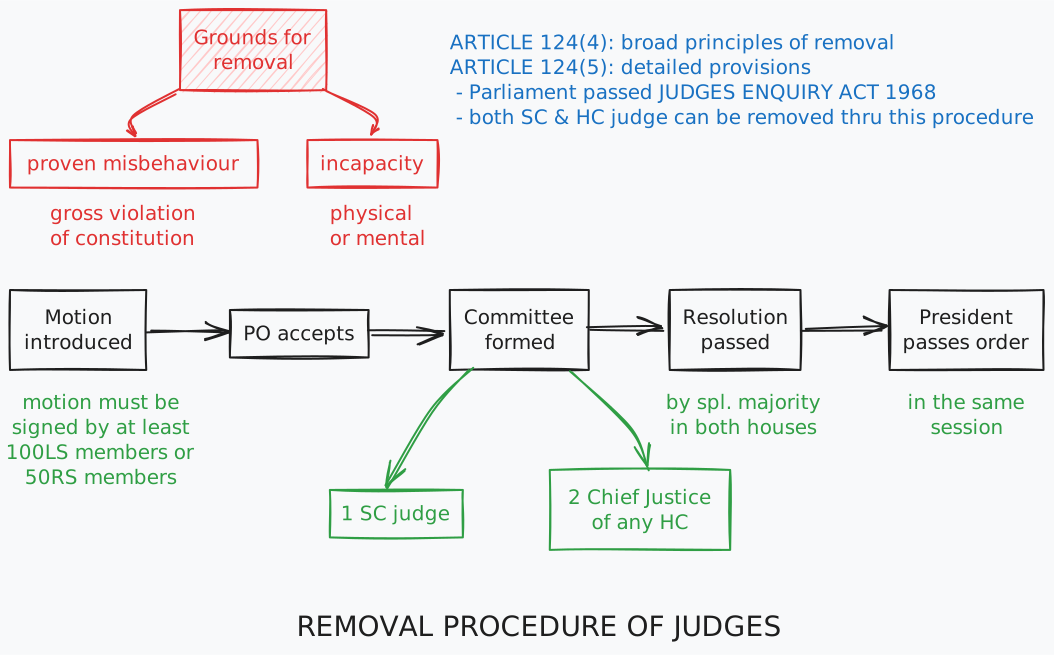
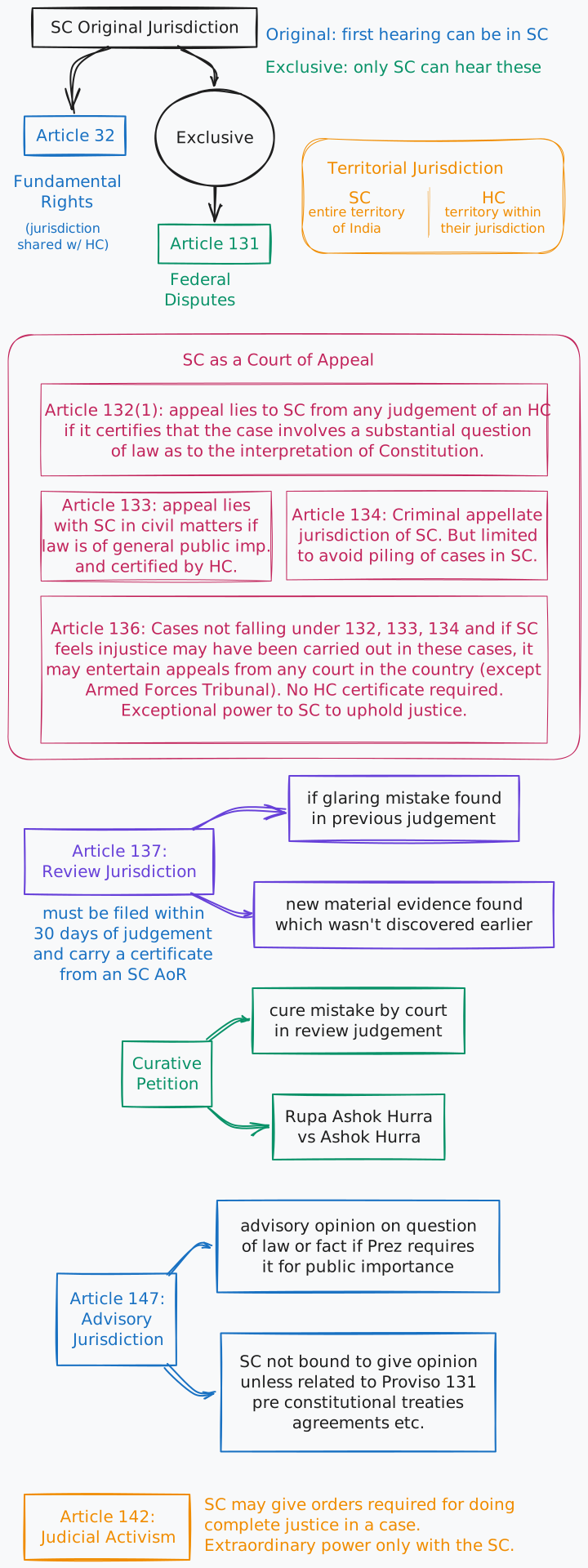
Article 32: Writ power to SC throughout country only for enforcement of FR. Writ power to SC is part of Basic Structure Doctrine as per L Chandra Kumar v UoI 1997 hence cannot be amended.
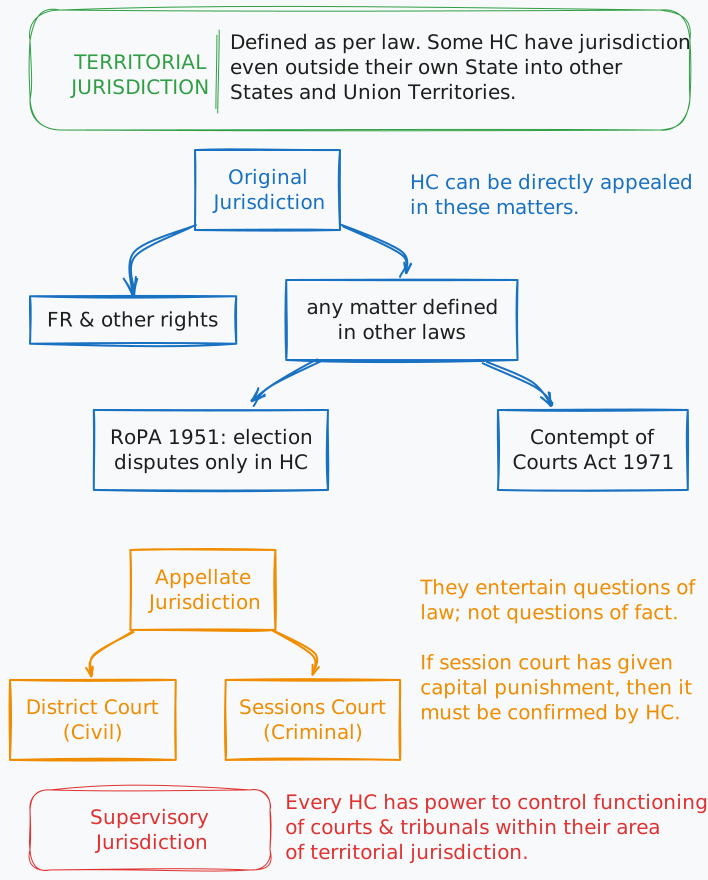
Article 226: Writ powers to HC for FR, Statutory Rights
HC hence has broader jurisdiction
Types of Writs
Habeas Corpus
release of person unlawfully detained / imprisoned
present person before court
Mandamus
”we command”
higher court → lower court, public authority or govt official
to prevent misuse of power or neglect of duty
Prohibition
higher court → lower court / tribunal to prevent it from exceeding its jurisdiction or acting contrary to laws
Certiorari
”to certify”
transfer case from lower to higher court esp. when question of jurisdiction
Quo Warranto
inquires legality of person’s claim to hold public office
Analyze the correlation between Fundamental Duties and the Preamble’s objectives, and assess how the fulfillment of Fundamental Duties contributes to achieving the ideals of justice, liberty, equality, and fraternity.
Evaluate the role of education in promoting awareness and adherence to Fundamental Duties, and explore the linkage between educational policies and the cultivation of a sense of responsibility among citizens.
Examine how the Fundamental Duties act as a moral and ethical compass in governance, and analyze instances where non-compliance with these duties may have implications on public policy and administration.
Assess the relationship between the Fundamental Duties and environmental conservation, exploring how citizen responsibilities contribute to sustainable development and the protection of natural resources.
Analyze the interplay between the Fundamental Duties and constitutional amendments, considering the role of civic engagement and public discourse in shaping amendments that align with the evolving needs of society.
not part of original constitution
added Article 51A in Part IVA via 42nd CAA 1976 upon recommendation of Sardar Swaran Singh Committee
inspired by USSR 🇷🇺
Significance
reminder to citizens
warning against anti national & anti social acts
src of inspiration, discipline
constitutional validity of laws
enforceable by other laws
Criticism
not exhaustive
taxes
family planning
vague, over ambitious, difficult to understand
”noble ideas” 🤔
“scientific temper” 👩🔬
superfluous inclusion
reduced value by being Pt IV A rather than Pt. III A (i.e. just after FR)
Verma Committee 1999
Identified parallel legal provisions for implementation of FD
Evaluate the relationship between the Directive Principles of State Policy and Fundamental Rights, analyzing how the former guides the state in framing laws and policies to realize the goals set by the latter.
Examine the role of Directive Principles in shaping economic policies, particularly in the context of achieving a just and equitable distribution of wealth and resources, and assess their impact on contemporary economic reforms.
Analyze the linkage between Directive Principles and social justice, exploring how policies related to reservation, affirmative action, and inclusive development align with the constitutional mandate to bridge socio-economic disparities.
Evaluate the implications of Directive Principles on educational policies, considering how they influence the state’s approach to ensuring access to quality education and promoting scientific temper among citizens.
Examine the role of Directive Principles in environmental governance, particularly in the context of sustainable development and conservation, and assess how constitutional principles guide legislative and policy measures.
Analyze the relationship between Directive Principles and cooperative federalism, evaluating how these principles guide intergovernmental relations and the distribution of powers between the center and the states.
Assess the impact of Directive Principles on health policies and public healthcare infrastructure, examining how constitutional principles influence the state’s responsibility in providing healthcare services to its citizens.
Explore the linkage between Directive Principles and cultural and educational rights, considering how these principles contribute to the preservation and promotion of diverse cultural heritage in India.
Examine the role of Directive Principles in shaping agrarian policies and rural development, analyzing how constitutional principles guide the state in addressing agrarian challenges and ensuring sustainable rural growth.
Evaluate the relationship between Directive Principles and technological advancements, exploring how these principles inform policies related to digital literacy, access to information, and the ethical use of technology in governance.
About
36: Definition of State (same as Article 12)
37: fundamental for governance but non enforceable by any court
List of Directives
38: welfare, justice, minimize income inequalities; justice - social, eco, pol
progressive taxation
39: equitable distribution of resources, livelihood, no concentration of wealth, equal pay (link Women Issues and Welfare)
Parliament: amends all FR which were in conflict with DPSP 😩
Kerala Education Bill (1957): Doctrine of Harmonious Construction
Re Kerala Education Bill (1957), SC said that there is no inherent conflict b/w DPSP & FR
when interpreting a law, courts should interpret in such a manner that harmonizes both as far as possible
if only one interpretation that leads to conflict, then favour FR 💪
Golak Nath Case (1967)
Court: FR can’t be abridged or diluted.
Parliament: 25th CAA, inserted Article 31C, explicitly allowing law for DPSP 39(b) & 39(c) to not be deemed unconstitutional if it violates Article 14, 19 or 31 🥴 Such law can also not be questioned in a court of law. 🤯
Kesavanath Bharathi Case (1973) 💰
Court: amend anything but don’t destroy basic structure. 31C(b) is unconstitutional.
Parliament: 42nd CAA 1976, extended 31C(a) to include all DPSP.
Minerva Mill Case (1980) 🏭
Court: can protect only 39(b) & 39(c). Not all DPSP.
Present preference order
FR except 14 and 19
DPSP 39(b) and 39(c)
FR 14 and 19
DPSP except 39(b) and 39(c)
Observation
Court allows socialist DPSP to be favored over Right to Equality and FoSE 🧠
Article 5-10 resp. for determination of citizenship status as the time of commencement of constitution
Article 11: Parliament empowered to make laws to determine citizenship status once constitution comes into force
Citizenship Act 1955 enacted and amended several times thereafter
Article 5
citizenship status of people domiciled in India at time of commencement of constitution
considered a citizen of india if
born in territory of india
either parents born in territory of india
resident in india for 5 yrs before commencement of constitution
Article 8
citizenship status of people of Indian origin, not resident in India at time of commencement of constitution
such person needs to register with a Councillor representative or diplomatic authorities of india in that country
PIO: himself, parents or grandparents born in undivided india
Article 6
citizenship status of people who migrated from Pakistan
if migration before 19 July 1948, eligible for citizenship if parents or grandparents born in undivided India
if migrated after given date, he needs to undergo additional step of registration with an officer appt by the govt for this purpose
Article 7
citizenship status of those who remigrated from Pakistan to India
such person shall not be provided w/ citizenship unless returned to territory of India with a permit of resettlement or permanent return issued by Govt.
Article 9
acc to this, India did not allow dual citizenship on 26 January 1950
∴ if a person falls under under Art 5, 6 or 8, he still wouldn’t be considered citizen of India if he had acquired citizenship of a foreign state
Acquisition of citizenship under Citizenship Act 1955
This is the actual law that presently applies.
By birth
deemed to be citizen of India at birth if takes birth in territory of India AND if either parent is an Indian citizen and other is not illegal immigrant
b/w 1987-2004: a person born in territory of India would have been a citizen if either parents were indian citizen at time of birth
before 1987: a person taking birth in territory of Indian was entitled to indian citizenship irrespective of these citizenship status of parents
By decent
person born outside India to either of Indian parents entitled to Indian citizenship if
birth was registered at an Indian Embassy or consular representative
done within a period of one year of birth or during the extension period allowed
before 2004: no requirement for registration within a specific time period
before 1992: a person should have been born to an Indian father
By registration
PIO eligible for citizenship upon meeting certain requirements
foreign citizen married to indian citizenship eligible for indian citizenship upon satisfying certain conditions
Naturalization
person w/ NO ties to india can also become indian citizen if he has resided in india for certain number of years and fulfills some other conditions as well
Incorporation of Territory
india being sovereign, may acquire other territories
persons in such territories shall be eligible for indian citizenship upon meeting certain requirements
Renunciation: voluntarily declare and renounce indian citizenship
can’t do when india at war
Deprivation: govt may deprive in case he has acquired Indian citizenship through fraud, false representation etc or has shown disloyalty towards constitution or unlawfully communicated with enemy during war etc.
person who was citizen of india on or after 26 January 1950 or was eligible to become citizen of India after 26 January 1950 or is a child or grandchildren of such a person
person not eligible for OCI status if his parents or grandparents have been citizens of Pakistan or Bangladesh
Benefits of OCI
multi purpose, multi entry lifelong visa of India
exemption from registration w/ local authorities for any length or stay in India
can exercise ownership rights over property and apply for an Indian PAN card
eligible for appt in teaching positions at central universities
all persons belonging to Hindu, Sikh, Buddhist, Jain, Parsi and Children from Bangladesh, Pakistan or Afghanistan who came to India before 31 Dec 2014 shall not be treated as illegal immigrants if exempted under Passport of Foreigners Entry Act by central govt
amendment sought to provide citizenship to persecuted minorities in above mentioned countries
Analyze the President’s discretionary powers in appointing the Prime Minister and their role in shaping the stability of the government, especially in coalition politics, and its impact on governance.
Examine the President’s role as the Supreme Commander of the Armed Forces and assess how this constitutional position influences civil-military relations and national security policies.
Evaluate the President’s power to issue ordinances and its relevance in modern governance, considering the balance between executive efficiency and the democratic principle of legislative oversight.
Analyze the President’s role in the process of constitutional amendment, exploring how the President acts as a check on constitutional changes and safeguards against potential abuse of power.
Examine the relationship between the President’s power to grant pardons and the principles of justice, mercy, and constitutional morality, particularly in the context of high-profile criminal cases.
Assess the President’s role in the appointment of key constitutional functionaries, such as judges and governors, and its impact on the independence of the judiciary and federal structure.
Analyze the President’s role in the proclamation of emergency and its implications for civil liberties, examining the balance between national security concerns and the protection of individual rights.
Examine the President’s constitutional duty to protect and defend the Constitution, exploring how this role manifests in instances of constitutional crises or conflicts between different branches of government.
Evaluate the President’s role in international affairs, including the power to conclude treaties, and assess how this constitutional authority intersects with the principles of parliamentary consent and democratic accountability.
Analyze the President’s role in the dissolution of the Lok Sabha and its impact on the democratic process, considering the circumstances under which this power can be exercised and its implications for electoral politics.
Articles 52-78
Election
conducted by EC as per method in Article 55(3)
by electoral college (Article 54) with only elected members of
both houses
State LA
LA of Delhi & Pondicherry
single transferable vote system
uniformity in scale of representation
candidate must not hold office of profit
exception: Prez, VP, Gov, UCom, SCom
any inquiries via SC only
Quota System
Winning candidate must secure quota of votes
Quota=TotalSeats+1TotalVotes+1
In case of India,
Quota=2TotalVotes+1
i.e. > 50% votes
Why Indirect Election?
Prez == nominal executive only
direct election costly, time consuming
Impeachment
quasi judicial procedure in Parl
nominated members too participate
Delhi/Pondicherry LA members don’t participate (even though they voted in election)
Analyze the constitutional provisions regarding the President’s power to promulgate ordinances and assess how this authority balances the need for prompt legislative action with the principles of parliamentary democracy.
Explore the intersection between the President’s ordinance powers and the limitations imposed by judicial review, considering recent legal interpretations and their implications for the scope of executive action.
Assess the role of ordinances in the context of contemporary governance challenges, such as public health emergencies or economic crises, and analyze how the President’s power to promulgate ordinances aligns with the evolving needs of the nation.
Examine the relationship between the President’s ordinance powers and the principles of federalism, evaluating how these powers affect the distribution of legislative authority between the center and the states.
Analyze recent instances where the President’s ordinance powers have been utilized and assess the effectiveness of ordinances in addressing urgent issues, considering the impact on the legislative process and democratic accountability.
Analyze the constitutional provisions related to the declaration of a national emergency and assess how the suspension of Fundamental Rights during emergencies strikes a balance between national security and individual liberties.
Examine the interplay between the President’s power to proclaim a state of emergency and the constitutional safeguards intended to prevent its misuse, particularly in light of the basic structure doctrine.
Evaluate the impact of a national emergency on the federal structure of the Indian polity, considering how it temporarily alters the distribution of powers between the center and the states and its implications for cooperative federalism.
Assess the role of the President, the Council of Ministers, and Parliament during a national emergency, analyzing the constitutional checks and balances in place to prevent authoritarianism and uphold democratic principles.
Explore the linkage between the proclamation of a state of emergency and the suspension of the right to constitutional remedies, and analyze how this suspension affects the judicial review of executive actions during emergencies.
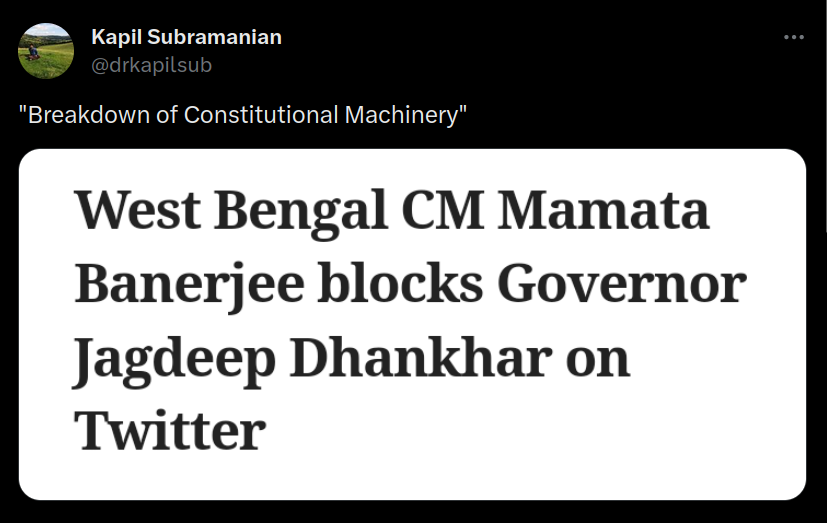
Examine the constitutional provisions related to a state of emergency arising due to the failure of constitutional machinery in a state and assess the implications for the relationship between the center and the states.
Analyze the impact of a financial emergency on the fiscal policies of the country and its repercussions on the economy, considering the constitutional provisions that empower the President to declare such an emergency.
Parl approval within 1mo with spl majority (as per 44th CAA 1978)
Duration 6mo at a time
written advice of CoM mandatory (as per 44th CAA 1978)
Spl sitting of HoP necessary within 14 days
if 101 in writing intend to move motion against PoE and approved, then PoE discontd.
Failure of Constitutional Machinery (356)
Conditions
gross violation of constitutional provisions
hung assembly
state govt in secessionist acts
Article 355: duty of the Union to protect every State against external aggression and internal disturbance and to ensure that the Government of every State is carried on in accordance with the provisions of the Constitution
Effects
CoM dismissed: Prez gets exec pwr
SLA suspended: Prez gets legis pwr
Prez can make other orders for effective implementation of 356
Analyze the Vice President’s role as the ex-officio Chairman of the Rajya Sabha and assess how this constitutional position contributes to the functioning of the upper house and legislative processes, considering recent instances of legislative dynamics.
Evaluate the Vice President’s role in the absence of the President, especially in the context of recent geopolitical challenges and how this constitutional provision ensures continuity in executive authority.
Examine the constitutional provisions regarding the Vice President’s tie-breaking vote in the Rajya Sabha, and analyze its implications for maintaining a balance of power between the two houses of Parliament.
Assess the Vice President’s constitutional responsibilities in the context of international engagements and diplomatic functions, exploring how this role contributes to India’s global representation and diplomatic strategies.
Analyze the constitutional provisions related to the removal of the Vice President and assess the checks and balances in place to prevent arbitrary use of this power, considering recent debates on the impeachment process.
Election
indirect election
but State LA don’t participate
nominated members do participate
most qualifications same as being RS member, but age ≥ 35
Analyze the constitutional basis for the Prime Minister’s powers of appointment and dismissal of ministers, and assess how this authority influences the dynamics within the Council of Ministers and the overall governance structure.
Examine the constitutional provisions that empower the Prime Minister to advise the President on the appointment of key officials, such as Governors and Chief Justices of High Courts, and evaluate the implications for the federal structure.
Assess the linkage between the Prime Minister’s role as the head of the government and the principles of collective responsibility, analyzing how this constitutional concept is maintained in the context of coalition politics.
Analyze the Prime Minister’s role in the formulation and implementation of foreign policy, considering how this constitutional authority intersects with the President’s powers in matters of international relations.
Evaluate the constitutional provisions related to the Prime Minister’s participation in parliamentary debates and question sessions, and assess the role of parliamentary accountability in ensuring transparent governance.
Examine the Prime Minister’s role in the National Development Council and Planning Commission (now NITI Aayog), and assess how these constitutional roles contribute to coordinated policymaking and economic development.
Analyze the constitutional provisions that empower the Prime Minister to advise the President on the imposition of President’s Rule in states and assess the checks and balances in place to prevent misuse of this power.
Assess the Prime Minister’s role in shaping economic policies, considering recent instances of economic reforms and their alignment with constitutional principles of social and economic justice.
Examine the constitutional provisions related to the Prime Minister’s participation in the appointment of judges, and assess the implications for the independence of the judiciary and the separation of powers.
Analyze the contemporary challenges and opportunities in the exercise of emergency powers by the Prime Minister, exploring the constitutional safeguards and their adequacy in preserving democratic values during crises.
About
de facto executive
primus inter pares
leader of maj party
Delhi HC 1980: maj not necessary at time of becoming PM
prove maj after some time
SC 1997: non member also allowed to become PM
become member within 6 months
CoM collapses when PM resigns
Powers
recommends ministers to President
allocates portfolio among ministers
presides over CoM meetings
guides and controls activity of ministers
can ask minister to resign or ask Prez to dismiss minister
Analyze the constitutional principles that guide the allocation of portfolios among members of the Council of Ministers and assess how this process contributes to the effective functioning of the government.
Examine the role of the Council of Ministers in the legislative process, considering how their engagement with Parliament aligns with constitutional principles of accountability and transparency.
Assess the constitutional provisions related to the collective responsibility of the Council of Ministers and analyze its significance in the context of coalition governments, exploring how this principle is maintained in diverse political scenarios.
Examine the Council of Ministers’ role in the decision-making process during national emergencies, evaluating the balance between executive action and parliamentary oversight under such circumstances.
Analyze the constitutional provisions regarding the Council of Ministers’ relationship with the President, considering instances where their advice may be binding or discretionary, and assess the impact on the separation of powers.
Types of Ministers
These classifications don’t exist in Constitution.
Cabinet Minister: seniormost minister, takes decision on imp matters of behalf of rest of CoM
Minister of State (Independent Charge): full charge of particular ministry, can also attend cabinet meeting upon invitation
Minister of State Dependent: relatively junior minister, reports to either Cabinet Minister or Independent Minister
Deputy Minister
Details
75(3): principle of collective responsibility shall be ensured
if a member doesn’t agree with decision of CoM, he must resign
a minister may be removed any time by Prez order
CoM supposed to be headed by PM, his resignation or death death ⟹ dissolution CoM
Analyze the constitutional provisions that empower Parliament to amend the Constitution and assess the implications of such powers on the basic structure doctrine, examining recent instances of constitutional amendments.
Examine the role of Parliament in financial matters, including budgetary processes and taxation policies, and assess how this constitutional authority contributes to fiscal governance and economic development.
Assess the linkage between Parliament’s power to enact laws and the principles of federalism, exploring how legislative powers are distributed between the center and the states, and their impact on cooperative federalism.
Analyze the constitutional provisions related to parliamentary oversight, including mechanisms such as question hour, parliamentary committees, and debates, and assess their effectiveness in ensuring accountability and transparency in governance.
Examine the role of Parliament in the appointment and removal of key constitutional functionaries, such as judges and the Chief Election Commissioner, and evaluate the impact on the independence of these institutions.
Assess the constitutional provisions regarding the declaration of a national emergency and the role of Parliament in ratifying or revoking such declarations, considering the balance between executive powers and legislative scrutiny.
Analyze Parliament’s role in the international arena, including the ratification of treaties and agreements, and assess how this constitutional authority intersects with India’s foreign policy and global engagements.
Examine the constitutional provisions related to parliamentary privileges and immunities, and assess the balance between these privileges and the need for accountability and public scrutiny, especially in the context of recent debates on parliamentary conduct.
Evaluate the role of Parliament in ensuring social justice, examining how constitutional provisions related to reservation policies and affirmative action contribute to inclusive governance.
Analyze the constitutional provisions that empower Parliament to regulate citizenship and immigration policies, and assess the implications of recent legislative changes on the principles of equality and non-discrimination.
Vacancy of seats in Parl
legislator may resign (submits resignation to PO)
PO ensures resignation is genuine & voluntary otherwise doesn’t accept
> 60 day absent w/o perms of PO may be removed from membership by passing a resolution
if person elected at 2 seats in LS, he choose which retain else both lost
if person elected to both HoP, CoS, chooses which retain else CoS seat vacant
if person in both Parl & SLA, unless previously resigned, seat in Parl shall be vacant
Salaries and Pensions
While the 2nd Schedule mentions salaries of certain position in Government, it does NOT mention the salary of MP.
Article 106 allows Parl to make law regarding their own salary and allowances.
but no mention of pensions in constitution
consequently Salary, Allowances and Pension of Members of Parliament Act 1954 came into force
Analyze the constitutional provisions that empower the Lok Sabha in the formation and continuation of the government, and assess how this role contributes to the stability of the executive and the principles of parliamentary democracy.
Examine the linkage between the Lok Sabha’s legislative powers and the principles of representative democracy, evaluating how legislative processes ensure the voice of the people in policy-making.
Assess the constitutional provisions related to the Lok Sabha’s control over finances, including budgetary processes and financial oversight, and examine the impact on economic governance and fiscal responsibility.
Analyze the role of the Lok Sabha in the removal of the Prime Minister and the Council of Ministers, and assess how this constitutional provision ensures accountability and checks on executive power.
Examine the constitutional provisions regarding the Lok Sabha’s participation in the amendment of the Constitution, and assess how these powers contribute to the evolving nature of the Indian Constitution.
Assess the linkage between the Lok Sabha and the President in matters of national emergencies, examining the role of parliamentary approval and oversight during such situations.
Analyze the constitutional provisions that empower the Lok Sabha in matters of impeachment of the President and assess the checks and balances in place to prevent misuse of this power.
Examine the role of the Lok Sabha in addressing social justice issues, particularly in the context of legislation related to reservation policies and affirmative action, and assess its impact on inclusive governance.
Evaluate the constitutional provisions related to the Lok Sabha’s participation in the appointment and removal of key officials, such as judges and the Chief Election Commissioner, and assess the impact on the independence of these institutions.
Analyze the role of the Lok Sabha in addressing contemporary challenges, such as public health crises and environmental issues, and assess the effectiveness of legislative responses in addressing these concerns.
Composition
Pre 2020: 552 members
530: states
20: UT
2: Anglo Indians
Post 2020: 524 members (max 550)
524: states
19: UT
Election
First past the post system
secret ballot
Allocation of seats
as per last preceding census
but frozen at 1971 census, till first census post 2026
constituency delimitation frozen at 2001 census
reserved seats for SC/ST based on 2001 census
Section 4 of RoPA 1951
when contesting from an unreserved seat, candidate needs to be a voter from any constituency
SC/ST seat: Candidate needs to be SC/ST
Lakshdweep: ST of Lakshdweep
Sikkim: voter in Sikkim
Reserved ST seat from autonomous district of Assam: must belong to ST community from that autonomous district
Analyze the constitutional provisions that define the Rajya Sabha’s role in representing states in the federal structure and assess how this contributes to the principles of cooperative federalism.
Examine the linkage between the Rajya Sabha’s powers in the amendment of the Constitution and the preservation of the federal structure, evaluating its impact on maintaining the balance of power between the center and states.
Assess the constitutional provisions related to the Rajya Sabha’s participation in the removal of judges and key constitutional functionaries, and evaluate its role in ensuring the independence of the judiciary.
Analyze the role of the Rajya Sabha in shaping economic policies, particularly in matters of taxation and economic reforms, and assess its impact on fiscal governance and economic development.
Examine the constitutional provisions regarding the Rajya Sabha’s role in the declaration of a state of emergency and assess how its powers contribute to parliamentary oversight during such critical situations.
Assess the linkage between the Rajya Sabha and the President in matters of national emergencies, examining the role of parliamentary approval and oversight during emergency situations.
Analyze the constitutional provisions that empower the Rajya Sabha to participate in the appointment and removal of key officials, such as judges and the Chief Election Commissioner, and assess the impact on the independence of these institutions.
Evaluate the role of the Rajya Sabha in addressing social justice issues, particularly in the context of legislation related to reservation policies and affirmative action, and assess its impact on inclusive governance.
Examine the constitutional provisions related to the Rajya Sabha’s engagement with international affairs, including ratification of treaties and agreements, and assess how this contributes to India’s global representation and diplomatic strategies.
Analyze the role of the Rajya Sabha in addressing contemporary challenges, such as technological advancements and environmental issues, and assess the effectiveness of legislative responses in addressing these concerns.
Composition of CoS
as per Article 80
upto 250 members, at present 245
233 from states/UT
12 nominated by Prez
states have unequal representation
based on 1984 population
Qualifications
citizen of india
≥ 30 yr age
affirmation / oath mentioned in 3rd Schedule
must be qualified acc to RoPA 1951
Sec 3 RoPA: candidate must be voter (in any constituency)
not mentioned in Constitution, left to Parl to decide
RoPA 1951: 6 yr tenure, 31 members retire every 2 yr
National Commission to review the working of the Constitution (NCRWC) - Equal representation
smaller states feel present system discriminatory against them
NE States total 14 seats
UP alone 31 seats
US: perfect eg. of federation → provides equal rep to all states (2 each)
rep on basis of population turns RS into replica of LS while it was supposed to be away from populist politics of LS and act as chamber of discussion and deliberation
Args against Equal Rep
may result in greater demand for smaller states leading to ever increasing RS size
equal rep regardless of population may be discriminatory against larger states
Analyze the constitutional provisions defining the powers of the Presiding Officer in maintaining order and decorum in the house, and assess the role of these powers in upholding parliamentary etiquette and democratic principles.
Examine the linkage between the Presiding Officer’s role in the legislative process and the principles of impartiality and fairness, evaluating how these constitutional functions contribute to a balanced and transparent decision-making process.
Assess the constitutional provisions related to the Presiding Officer’s casting vote in case of a tie, and analyze the implications of this power on legislative outcomes and the principles of democratic representation.
Examine the role of the Presiding Officer in parliamentary committees and their engagement with legislative processes, assessing how this constitutional function contributes to in-depth scrutiny of legislation and policymaking.
Analyze the constitutional provisions related to the removal of the Presiding Officer and assess the checks and balances in place to prevent arbitrary use of this power, considering recent debates on parliamentary conduct and ethics.
Types
Lok Sabha
Speaker and Deputy Speaker elected by house
panel of chairmen: 10 members chosen by speaker
Proviso 294: speaker shall continue to hold office till first sitting of newly elected LS
Removal of Speaker and Deputy Speaker
S and DS: resolution passed by house with maj of then membership. 14day notice
Speaker won’t have casting votes when notice period
Rajya Sabha
Chairman (VP in ex officio capacity)
Deputy Chairman chosen by vote
panel of chairmen: 6 members
Removal of Chairman and Deputy Chairman
no separate procedure for Chairman. Follow VP procedure
pass a resolution by effective maj of house, approved by LS (Simple Majority)
chairman can partake in removal proceedings, but no vote
Analyze the constitutional provisions defining the role of the Governor in the appointment of Chief Ministers and assess how this power influences the stability of state governments and the principles of representative democracy.
Examine the linkage between the Governor’s role in the dissolution of state assemblies and the principles of constitutional morality, evaluating the circumstances under which this power can be exercised and its implications for democratic processes.
Assess the constitutional provisions related to the Governor’s discretion in matters such as withholding assent to bills and the summoning or proroguing of the state legislature, and analyze the balance between gubernatorial authority and the principles of responsible government.
Examine the Governor’s role in the protection and preservation of tribal and indigenous rights, considering constitutional provisions and recent developments in addressing issues related to land and resources in tribal areas.
Analyze the constitutional provisions regarding the Governor’s participation in the appointment and removal of key state officials, such as judges and the State Election Commissioner, and assess the impact on the independence of these institutions and the separation of powers at the state level.
Appointment
chosen by President by issuing a warrant carrying his signature and seal
Removal
Article 156
Gov shall hold office during the pleasure of President
Removal w/o notice
reduces sanctity of position
violates PNJ
compromises independence of office
over politicization of post
BP Singhal v UoI
pwr of UoI to remove Gov subject to JR if petitioner can prove that removal was based on arbitrary grounds
mere variance of opinions not grounds for removal
judgement criticized
how can petitioner prove arbitrary grounds?
Way ahead
CoM must behave responsibly. Should not misuse power
not possible in reality ← political compulsions
∴ expert bodies suggested removal must happen as per a resolution passed by SLA or Parl
Discretionary powers of Gov
Gov supposed to act on aid and advice of SCoM except where he has been provided with discretionary pwrs or as per situation
Article 239(2): gov appt as administrator of adjoining UT shall act at his discretion wrt administration of UT
Sch6, Para 9: if dispute wrt share of autonomous district in royalty from mining & licence → Gov shall exercise discretion
States with spl statuts (Assam, Sikkim, Arunachal Pradesh): Gov exercises spl powers at discretion
Art 356: gov exercises his discretion on submission of reports wrt FoCM
Art 200: Gov may reserve bill for assent of Prez if he considers it to be of nat. impt
Criticism of Position
rehab of rejected politicians
appt made without SCoM consultation
ex army officials, ex judges, ex bureaucrats been appt, raising questions over independent functioning
spoil system, appt based not on merit but on political proximity
Analyze the constitutional provisions defining the role of the State Legislature in matters of public finance, including budgetary processes and taxation policies, and assess how these powers contribute to fiscal governance and economic development at the state level.
Examine the linkage between the State Legislature’s role in the appointment and removal of key state officials, such as the State Election Commissioner and judges, and the principles of independence and separation of powers within the state.
Assess the constitutional provisions related to the State Legislature’s participation in the amendment of the state constitution and evaluate how these powers contribute to the adaptability and relevance of state-level legal frameworks.
Examine the role of the State Legislature in addressing social justice issues, particularly in the context of legislation related to reservation policies and affirmative action, and assess its impact on inclusive governance at the state level.
Analyze the constitutional provisions defining the State Legislature’s role in matters of public health, education, and welfare, and assess how these powers contribute to effective state-level governance and responsive policy-making.
Examine the State Legislature’s role in the protection of linguistic and cultural minorities within the state, considering constitutional provisions and recent developments in addressing issues related to cultural diversity.
Assess the linkage between the State Legislature’s engagement with local governance structures, such as Panchayati Raj institutions, and the principles of decentralization and grassroots democracy, evaluating the impact on participatory governance at the state level.
Legislative Assembly (168)
Article 168: Legislature = Gov and 2 houses
LC only in UP, Bihar, Maha, AP, TN, KT
Creating / Abolishing LC (169)
Article 169
State LA pass resolution by spl maj
Law then passed by Parl
such law can incl. provisions related to amendment of constitution but won’t be deemed CAA under Article 368 hence no spl maj needed
Seats (170)
Article 170: seats of LA: 50-300 (dependent on state population)
1971 census, waiting for 2026
Constituency boundary as per 2001 census
reserved seats for SC/ST based on 2001 census
Composition of LC (171)
members of LC ≤31 members of LA
31 elected by MLA
31 elected by members of local bodies
31 divided as
61 nominated by gov (aid & advice of CoM)
61 divided as
121 graduate constituency
121 teacher constituency
Critical Analysis of LC
superfluous body; no special purpose
only a delaying body (at max 4mo)
chamber of rejected politicians, backdoor entry to defeated candidates
expensive to maintain SLC (200-300cr/yr)
rep of pol parties in student and teacher constituency defeats their purpose
Raj, Tn abolished LC cuz lack of utility
SLC created / abolished due to pol reasons
In support of LC
prevents majoritarianism
prevents hasty and populist legislation
provides rep to grassroot bodies
rep to diverse sections
presence of technical expertise due to nomination route
Analyze the constitutional provisions related to the distribution of legislative powers between the center and states and assess how these provisions contribute to cooperative federalism, considering contemporary challenges in governance.
Examine the role of constitutional bodies like the Finance Commission in facilitating fiscal federalism, and assess their impact on equitable distribution of resources between the center and states.
Assess the constitutional provisions related to inter-state disputes and the role of the President in their resolution, analyzing how these mechanisms contribute to maintaining peace and harmony between states.
Analyze the constitutional provisions regarding the imposition of President’s Rule in states and assess the checks and balances in place to prevent misuse of this power, considering recent debates on its application.
Examine the linkage between the National Development Council (NDC) and the principles of planning and coordination between the center and states, evaluating how these constitutional mechanisms contribute to holistic development.
Assess the constitutional provisions related to the Governor’s discretionary powers, particularly in the context of differences between the center and states, and analyze the impact on the federal structure and principles of democratic governance.
Examine the constitutional provisions defining the President’s power to withhold assent to state bills and assess the balance between gubernatorial authority and the principles of responsible government at the state level.
Analyze the role of constitutional bodies like the Inter-State Council in addressing contemporary issues and challenges in Centre-State relations, evaluating their effectiveness in fostering collaboration and resolving disputes.
Centre in india is unarguably stronger than the state. Roots of such a set up can be traced back to Charter Act 1833.
Dimensions
Territorial
Article 245: U laws applicable across territory of India or a part. State laws only in state.
Article 245(2): laws made by union may have extra territorial operation. eg. Maritime Piracy Act
Subject Matter
division as per Article 246 and subjects in Schedule VII
Doctrine of Territorial Nexus
law of state may have operation outside state if ∃ sufficient nexus b/w subject & territory of state
RMDC v State of Bombay
Charushila Devi v State of Bihar
TISCO v State of Bihar
Exceptions to Territorial Application
Scheduled Areas (Schedule V): Govt by notif: Parl/SLA law may not apply or modified
tribal area under Schedule VI: Govt/PRez may notify Parl/SLA law may not apply or modified
Article 371A, 371G: Parl law not apply to certain matters in NL, MZ unless approved by LA of NL, MZ
Prez can make regulations for peace and good governance of UT by amending Parl laws
Exceptions to law making power of State on state subjects
Article 249: If CoS passes resolution w/ ≥32 maj, voting necessary in nat interest for Parl to make law on state subject, then competent
Such resolution in force for 1yr max, extended by subsequent resolution by CoS
1986: CoS passed resolution to allow Parl to make laws on specific subj in state list to deal with militancy in Punjab & infiltration in J&K
Article 250: Parl may enact law on state subj when PoE in operation
such law ceases to have effect on expiration of period of 6mo after PoE ceases to operate
Article 252: 2 or more states can request Union to legislate on specific state subject by passing resolution to that effect.
other states may pass subsequent resolution to adopt such law
law has no expiry date; can be repealed only by law of parl
eg.
Wildlife Protection Act
Urban Land Ceiling Act
Air Conservation Act
Article 253: Union can legislate on state subj for giving effect to India’s commitment at intl forum (treaty, agreement, convention). Once enacted, only Parl may repeal or amend such law.
The Lokpal Lokayukta 2011
Executive relation b/w Union & State
exec powers of U&S co-terminus with legis powers
Article 73, 162: exec powers of U shall extend to all those subjects on which it can make law and same for state
on concurrent list, subjc exec pwr rest with state unless explicitly mentioned in a pal law
States have more exec powers because
Lack of implementation agency with Union
proximity of states to local areas where laws have to be executed
Analyze the constitutional provisions related to the Anti-Defection Law and assess how they balance the need for stable governance with the principles of individual legislator’s freedom of conscience, expression, and association.
Examine the linkage between the Anti-Defection Law and the principles of parliamentary democracy, evaluating how these provisions contribute to maintaining the integrity and credibility of legislative bodies.
Assess the constitutional provisions related to exceptions and disqualifications under the Anti-Defection Law, and analyze how these provisions align with the principles of justice, fairness, and proportionality.
Examine the role of the Speaker in deciding cases of defection and assess the constitutional safeguards in place to ensure impartiality and transparency in such proceedings, considering recent debates on the functioning of Speakers in various legislative bodies.
Analyze the impact of the Anti-Defection Law on the functioning of political parties and intra-party democracy, considering its implications for party discipline and the representation of diverse viewpoints within a party.
Assess the contemporary relevance of the Anti-Defection Law in addressing challenges such as coalition politics, ideological shifts, and the role of social media in shaping public opinion, evaluating the need for potential reforms in light of evolving political dynamics.
Article 266: No expenditure can be incurred except with authorization of legis.
Preparation of Budget Document
Dept. of Economic Affairs (under Ministry of Finance) sends requisition to various depts and ministries asking for their budgetary demands for upcoming financial year
Presentation of budget and discussion
after tabling, FinMins makes budget speech in HoP
then presentation in CoS, then general discussion in both houses
following presented
Annual Financial Statement
Demand for Grants
Appropriation Bill
Finance Bill
Vote on Account
tool used by parl to allow exec spend money as per proposal until parl passes budget
passed before parl goes into break after budget discussion
taken for 2 months, for 1/6 of estimated expenditure
Committee stage
during recess, DRSC analyses grant demands in detail and provides their recommendations as a report
each committee analyses demands
31 members (21LS + 10RS)
Post committee discussion in Parl
after reassembly, demands for grant discussed in detail on basis of DRSC report
members may suggest cutting demands for grants
discussion in both houses, but only LS can introduce cuts
Cut motions
Policy Cut Motion: Complete disapproval. Amt reduced to Re. 1.
Token Cut Motion: Token of disapproval. Amt cut by Rs. 100
Economy Cut Motion: Demand reduced by Rs. X.
Appropriation Bill
introduced as per Article 114
all demands for grants put in form of an appropriation bill to withdraw money from CFI
Finance Bill
bill containing taxation proposals presented to Parl
Article 265: no tax shall be levied except by authority of law
when finance bill passed, budged deemed passed by Parl
Why parl doesn’t allow demands for grants in detail by itself?
layman politicians lack technical knowledge
Parl too big to make effective decision on complicated matters
Grants by Exec to Legis
Supplementary Grants: provided under 115(1)(a) when funds allocated under budget are insufficient to meet obj during FY
Additional Grant: need for expenditure upon new service associated with existing service not contemplated in budget
Excess Grant: money spent over and above grant amt
Exceptional Grant: expenditure on service not part of any service
Distribution of fiscal powers between the union and the states in such a manner so that both of them can function autonomously/independently on matters under their jurisdiction in an effective manner.
Principles
Existence of resource responsibility parity.
Elasticity of resources.
Independence and autonomy to spend the money as per one’s priority.
Vertical and horizontal parity to address the inequitable distribution of resources.
Aspects of accountability to ensure efficient and proper utilization of funds.
Concerns
grants often come with a number of unreasonable conditions
A large portion of Vertical transfers are made through this route therefore sidelining the role of finance commission.
States often complain that they are required to match the proportion of grants but do not have the liberty to decide the priorities.
Grants made under this route are not released on a timely basis therefore delaying the execution of various initiatives by the states.
Often these grants are one-time in nature and recurring expenditure has to be made by the states.
principle of judicial independence will be compromised as judiciary won’t enjoy primacy
any two members could block an appt by making contrary vote
presence of law minister improper as usually law ministers have been practicing advocates and government is largest litigant in court
violates principle of SoP and creates a conflict of interest in functioning of judiciary
criteria for selection of eminent persons vague, subjective and prone to misuse
Justice Chelmeshwar: judicial primacy neither guarantees judicial independence nor is it part of basic structure of constitution.
Way Ahead
parl may consider introducing another bill while providing primacy to judiciary in NJAC
till the time NJAC is adopted, judiciary must focus on bringing diversity in fn of collegium
parl must consider enacting a law to ensure judicial accountability & transparency
can be based on Judicial Standards and Accountability Bill 2012
acc to former president of SC Bar Association, the collegium system has created a system of Imperium in Imeprio (empire within empire). There is need to bring checks and balances in fn of collegium
collegium must have independent secretariat to help in its fn
work of judges already overburdened
take inspiration from British practice of judicial appt of judges since 2005. Eligible candidates submit their applications for appointments disclosing their relationships w/ sitting and retired judges of SC. Appts are made by a Judicial Appointment Commission.
exec & judiciary should hold detailed consultations w/ each other acc to memorandum of procedure evolved
after 4th Judges’ Case, the exec & judiciary tried to revise the MoP to inc the involvement in appt and transfer of judges
even tho MoP evolved and agreed upon by both, it has not been brought into practice either due to shortage of time w/ collegium or deliberate delays by executive
any adverse report by the IB should be treated w/ caution and an enquiry committee should be formed to look into such reports
if lack of quorum of permanent judges to hold or continue session of SC, CJI may appoint an HC judge as an ad hoc judge of SC for temporary period
only after consultation of CJ of HC concerned
if workload high, at any time, CJI can request a retired judge of SC or retired judge of HC (who is duly qualified for appt as a judge of SC), to act as a judge of SC for temporary period
if lower court or tribunal exercised power arbitrarily
can make rules to regulate fn of subordinate courts
can use contempt powers to ensure free and fair functioning
they control matters for judges in subordinate courts like
posting
promotion
granting of leave
if HC satisfied a case pending in subordinate court involves a substantial question of law, the HC may withdraw case from lower court and entertain that case itself
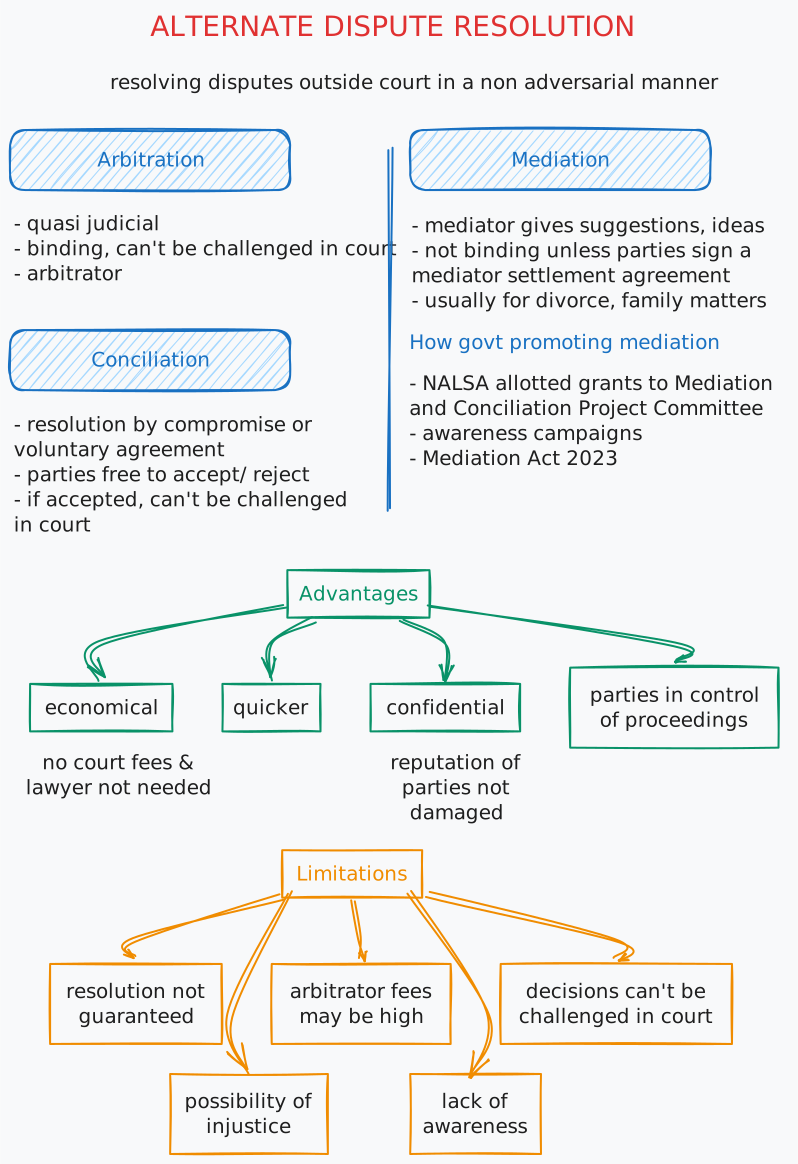
resolving disputes outside court in a non adversarial manner
both parties work together cooperatively to reach best resolution
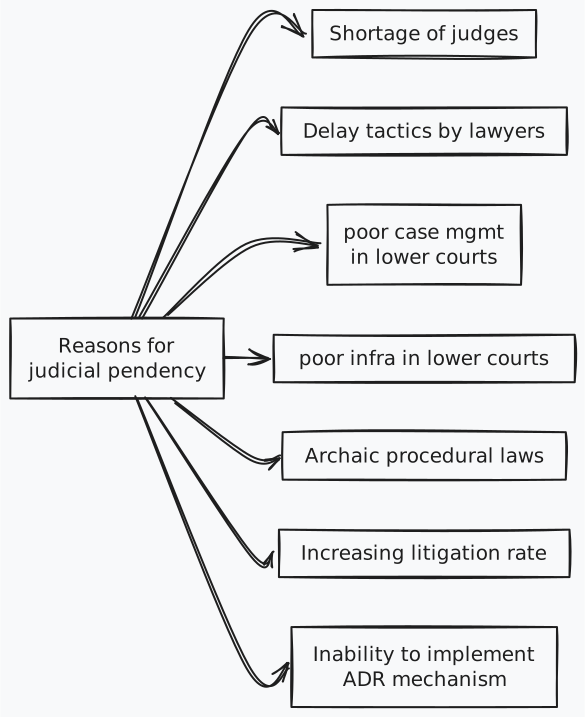
Most content below is already covered in above diagram.
Arbitration
disputes submitted to independent body - arbitrator
arbitrator gives final award
quasi judicial process
binding award, cannot be challenged in courts unless exceptional circumstances
not governed by archaic procedures, but rather by PNJ and Arbitration and Conciliation Act 1996
personal appearance of parties not always required
Mediation
neutral party (mediator) helps disputing parties resolve disputes by giving suggestions, facilitating free flow of ideas and establishing channel of communication
reach mutually agreeable settlement
usually considered during divorce and family matters
not a binding process unless both parties sign mediation settlement agreement
no standalone legislation to regulate mediation
lack of standardization
Steps by Govt to promote mediation
NALSA has allotted grants to Mediation and Conciliation Project Committee to support mediation activities incl training
awareness campaigns
Legal Services Authority and court annexed mediation centres actively involved in getting disputes settled thru mediation
Parliament enacted Mediation Act 2023 to enact standalone law on mediation
Conciliation
resolution reached by compromise or voluntary agreement
less formal than arbitration and parties are free to accept or reject recommendation made by conciliator
if accepted, then decision cannot be challenged in court unless exceptional circumstances
Arbitration and Conciliation Act 1996
Advantages
quicker disposal of cases
economical
confidential
no adverse damage to reputation of involved parties
parties in control of proceeding and can communicate
no payment of court fees and can choose to not avail services of lawyer
Limitations
not always result in resolution of disputes
wastage of time & resources
ADR can be more expensive since arbitrators charge hefty fee
decisions agreed to by both parties cannot be challenged in courts unless exceptional circumstances
possibility of delivering injustice due to informal nature
precedence set by ADR cannot be used in future
thus highly inefficient mechanism
lack of awareness among general public abt benefits of such amicable conflict resolutions
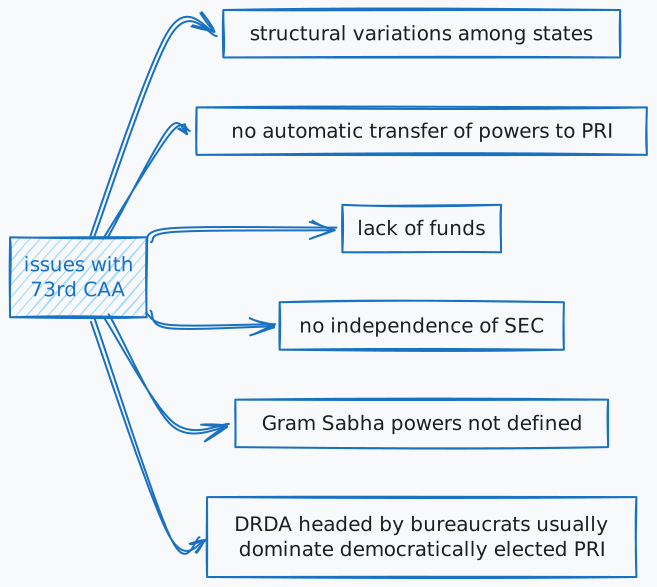
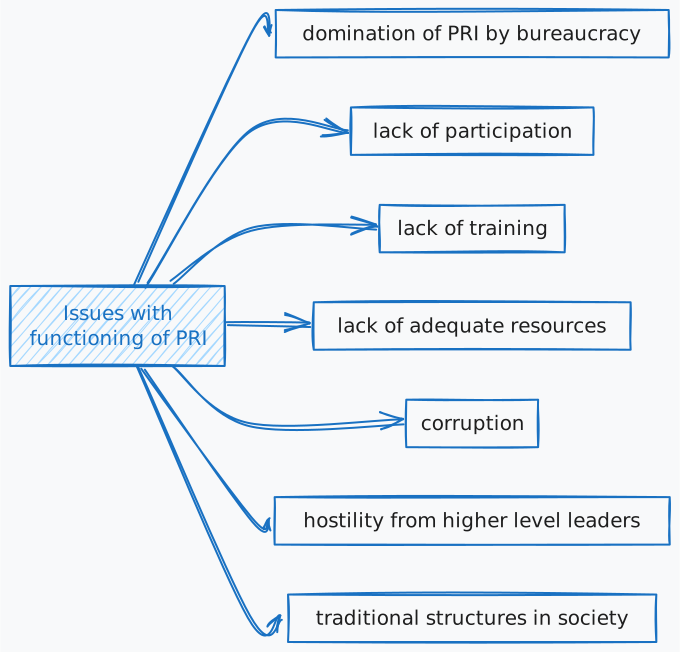
PRI generate only 5% of their finances through own sources and are highly dependent on state for their functioning
possess limited borrowing powers
states reluctant to implement recommendation of the SFC
States like Kerala, AP, Karnataka have done well when it comes to finances and thus the PRI are more autonomous and function in a more effective manner.
Recommendations
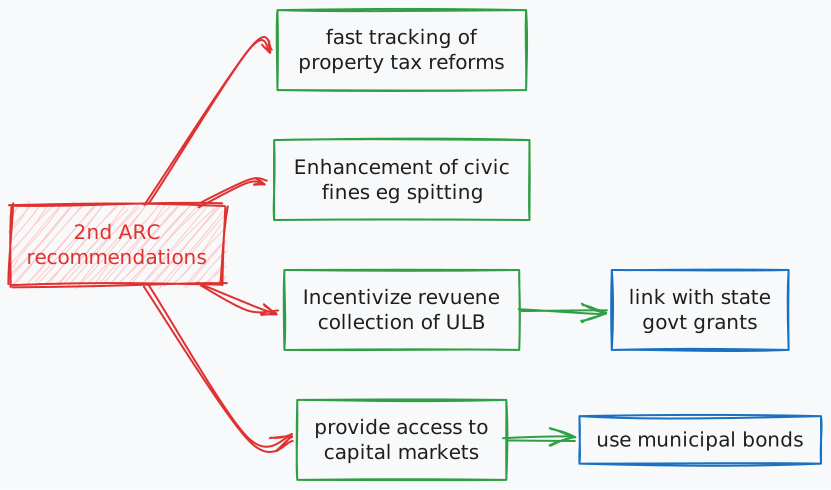
broadening and deepening of revenue base for PRI
state govt should release timely funds to the PRI and should be released in two installments
center also needs to financially incentivize states to encourage effective devolution to panchayats in functions, finances and functionaries
make devolution of functions mandatory in Article 243G
local legislators shouldn’t be made members of PRI
set up LC in all states to provide for representation to members of PRI
SEC should be appt through a committee consisting of LoP
SFC report and ATR to be submitted in 6months
abolish MPLADS and MLALADS scheme
parastatal bodies to be shut down
PRI should have right to recruit their own personnel and regulate their conditions of service
Karnatka success
Karnataka has created a separate bureaucratic cadre for Panchayats to get away from the practice of deputation of officials who often overpowered the elected representatives. Such practices need to be replicated in other states for strengthening the true character of local self-governance
direct election of mayors (like developed countries)
Municipal Commissioners be appted by state govt in consultation w/ mayor
involvement of citizens through RWA and other similar bodies
local govt in urban areas should cooperate with other govt levels as well as with civil society and pvt sector to effectively address challenges facing their communities
DPC to be constituted to consolidate plans prepared by Panchayats and Municipalities
state legis shall make provisions concerning
composition of such committees
manner of election of members
manner of election of chairperson
functions
representative of member should be in proportion to the population of panchayats and municipalities in such districts
≥ 4/5 members must be elected by and from amongst elected members of Panchayat and Municipal in the district in proportion to the ration b/ww population of rural & urban areas in district resp.
similar for metropolitan committee, except that bar is at ≥ 2/3 members
Article 239A(1): Parliament empowered to create (by law) for Pondicherry a legislature (elected or partly nominated) and/or a Council of Ministers
Article 239A(2): such law is not deemed amendment of constitution under Article 368, even though the law does amend
administrator of pondicherry can promulgate ordinance when legis not in session or if he is satisfied that circumstances exist which render it necessary for him to take immediate action
Ordinance making power of Administrator
Similar to state govt except
administrator cannot promulgate ordinance w/o first seeking instructions from President in that behalf
he cannot promulgate any ordinance when legis is suspended or dissolved
Governance
can make laws wrt State and Concurrent list
but Parl’s overall power to pass for UT on ANY subject is still preserved
if inconsistency, Parl law prevails
but if state law on concurrent subject has Prez assent, that prevails
administrator role similar to governor in matter of assent to bills
administrator not bound by aid & advice of CoM when acting in his discretion
if difference of opinion, matter referred to Prez
Article 239: in case of emergency, Prez can suspend operations of all or any provisions of the act and effectively administers the territory through the administrator
institution thru which accountability of govt & other public authorities to Parliament and State Legislature and through them to people is maintained
DR. B.R. Ambedkar
I am of the opinion that this dignitary or officer is probably the most important officer in the Constitution of India. He is the one man who is going to see that the expenses voted by Parliament are not exceeded or varied from what has been laid down by Parliament in the Appropriation Act.
recent times, also doing performance and propriety audits
Performance audit
CAG focuses on whether interventions, programs, institutions are performing in accordance with principles of economy, efficiency and effectiveness and whether there is room for improvement
CAG tries to examine whether social and economy objectives associated with intervention have been achieved or not and what improvements could have been made in the same
Propriety audit
CAG examines propriety of executive actions
looks beyond formality of expenditure to highlight any case of losses and extravagant expenditure
no structure or composition of PSC are provided by constitution
no fixed number of members
decided by President in case of UPSC & JSPSC
in case of SPSC, members & chairperson appt by Governor
Qualification
atleast 1/2 members should have held office for at least 10 years either uder GoI or under the Govt of a State
Term
UPSC: 6yr or age of 65 (whichever earlier)
SPSC: 6yr or age of 62 (whichever earlier)
Further appointment
SPSC Chairman: eligible to be appointed as chairman or member of UPSC upon conclusion of tenure. But eligibility for any other employment under GoI or State is not conferred.
UPSC Chairman: ineligible for further employment in GoI or State upon conclusion of term
UPSC member: eligible for appt as chairman of UPSC or SPSC but no other employment in GoI or State
Removal of UPSC Member or Chairman
Prez has authority to remove chairman or any member of UPSC under certain circumstances (SC approval NOT req.)
Adjudged insolvent (bankrupt)
engages in paid employment outside the duties of office during term
deemed unfit to continue in office due to infirmity of mind or body (as per Prez opinion)
Removal in case of misbehaviour also possible
but matter must be referred to an SC inquiry
member suspended while inquiry
if UPSC, JSPSC: suspension order by President
if SPSC: suspension order by Governor
Article 317(4): “if person is interested in any agreement or contract w/ the govt” → basis of misbehaviour
other interpretations of “misbehaviour” at discretion of Prez and approved by SC
conditions of service cannot be reduced to disadvantage after appt
salaries, allowances, pensions of chairman & members of UPSC/SPSC are charged expenditure on Consolidated Fund of India (CFI) or Consolidated Fund of State
bar on reappointment or any appt under govt post retirement
removal can be done only on specific grounds mentioned in constitutions
UPSC provides these functions for central services / all india services. SPSC provides these functions for state services.
examine appt to services of union & state
2 or more states may request UPSC for framing & operating schemes of joint recruitment for any services for which candidates with special qualifications are needed
consulted in making promotions & transfers from one service to the other and general transfers as well
consulted on disciplinary action to be taken against members of services
for a claim by civil servant in case of the cost incurred for legal proceedings in respect of acts done in an official capacity
concerning award or pension in case of injury sustained by civil servant while on duty
PSC need not be consulted by govt wrt reservation provisions to be made under Article 16(4)
Annual Reports: commission shall present their annual reports concerning their work to the President or Governor
the prez or governor in turn shall place a copy of ATR along with report of the commission in front of the concerned legislature