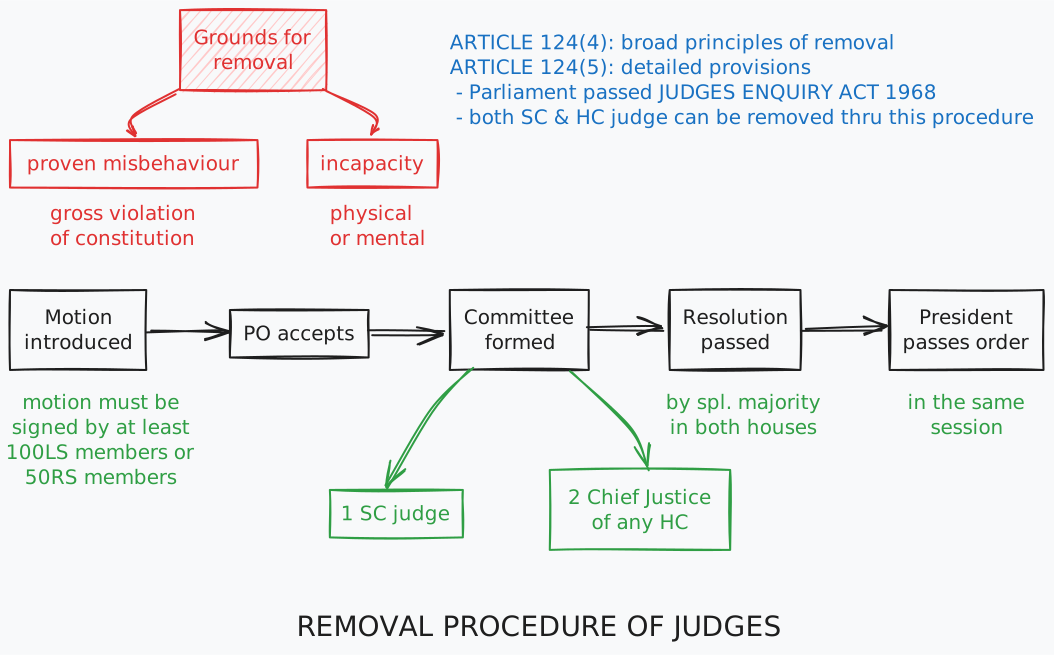
- Article 124(4): broad principles of removal
- Article 124(5): detailed provisions
- Parliament passed Judges Enquiry Act 1968
- both SC & HC judge can be removed thru this procedure
Grounds for removal
- Proven misbehaviour or incapacity
- neither term has been defined in constitution
- proven misbehaviour commonly refers to act of gross violation of constitution or such an act that is unbecoming of judge of the SC or HC
- incapacity may be due to phy/mental incapacity
Procedure
- acc to Judges Enquiry Act 1968
- motion of removal address to the President may be moved in either house of parl
- motion to be signed by atleast 100 members of Lok Sabha and 50 members of Rajya Sabha and delivered to Presiding Officer
- PO may reject the motion 🤪
- if accepted by PO, investigation committee shall be formed that shall enquire charges against the said judge
- Committee shall comprise of 3 judges
- judge of SC
- 2 chief justice of high court
- such appt is made by presiding officer of house
- if committee finds judge guilty, the motion, along with report of committee shall be taken up for consideration by that house of parliament
- judge may appear to defend his position
- if house passes resolution thru Special Majority it will be sent to second house, which must also pass with spl majority
- finally presented to President who should also pass order in same session
Issues with removal procedure of judges
refer: Removal of Judges
- judges susceptible to political process of voting which may or may not impeach judges despite a 3 member committee holding him guilty
- entire process concerns concerns of a possibility of harming judicial independence
- terms “misbehaviour” and “incapacity” not defined
- process too elaborate and cumbersome
- process hasn’t been able ho hold judiciary accountable