- resolving disputes outside court in a non adversarial manner
- both parties work together cooperatively to reach best resolution
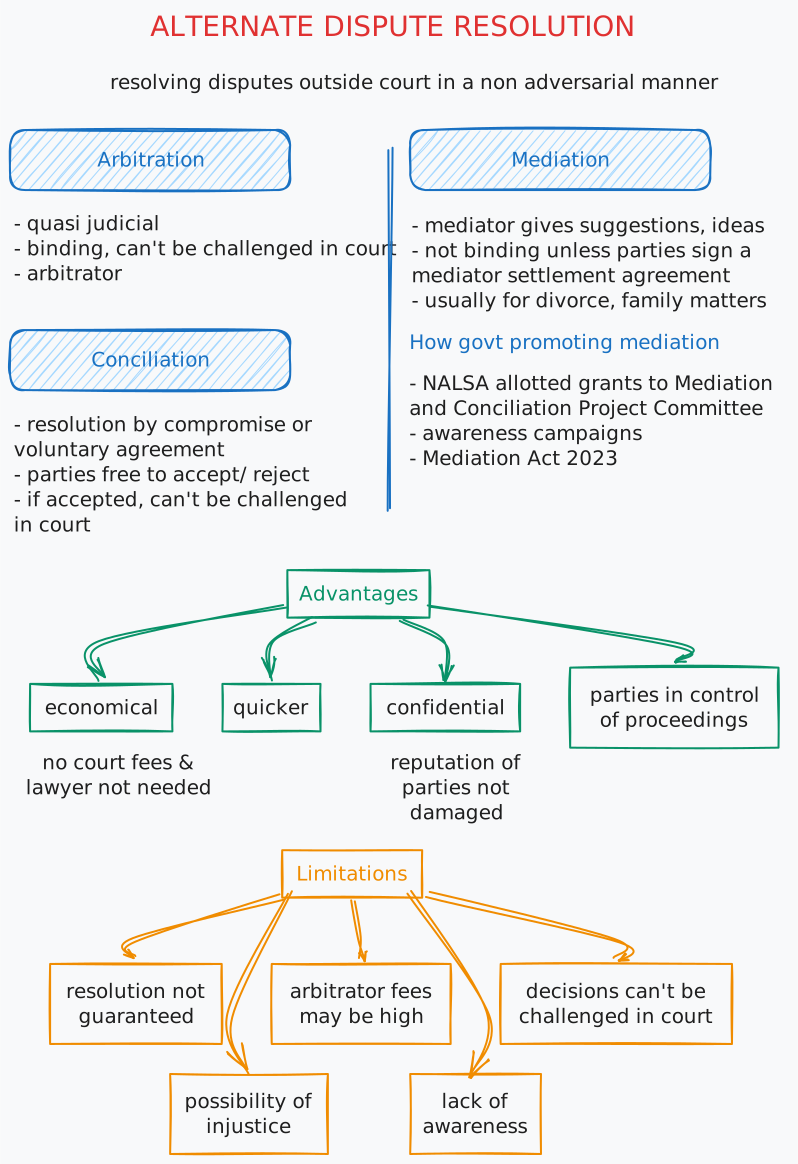
Most content below is already covered in above diagram.
Arbitration
- disputes submitted to independent body - arbitrator
- arbitrator gives final award
- quasi judicial process
- binding award, cannot be challenged in courts unless exceptional circumstances
- not governed by archaic procedures, but rather by PNJ and Arbitration and Conciliation Act 1996
- personal appearance of parties not always required
Mediation
- neutral party (mediator) helps disputing parties resolve disputes by giving suggestions, facilitating free flow of ideas and establishing channel of communication
- reach mutually agreeable settlement
- usually considered during divorce and family matters
- not a binding process unless both parties sign mediation settlement agreement
- no standalone legislation to regulate mediation
- lack of standardization
Steps by Govt to promote mediation
- NALSA has allotted grants to Mediation and Conciliation Project Committee to support mediation activities incl training
- awareness campaigns
- Legal Services Authority and court annexed mediation centres actively involved in getting disputes settled thru mediation
- Parliament enacted Mediation Act 2023 to enact standalone law on mediation
Conciliation
- resolution reached by compromise or voluntary agreement
- less formal than arbitration and parties are free to accept or reject recommendation made by conciliator
- if accepted, then decision cannot be challenged in court unless exceptional circumstances
- Arbitration and Conciliation Act 1996
Advantages
- quicker disposal of cases
- economical
- confidential
- no adverse damage to reputation of involved parties
- parties in control of proceeding and can communicate
- no payment of court fees and can choose to not avail services of lawyer
Limitations
- not always result in resolution of disputes
- wastage of time & resources
- ADR can be more expensive since arbitrators charge hefty fee
- decisions agreed to by both parties cannot be challenged in courts unless exceptional circumstances
- possibility of delivering injustice due to informal nature
- precedence set by ADR cannot be used in future
- thus highly inefficient mechanism
- lack of awareness among general public abt benefits of such amicable conflict resolutions
Laws for legal backing
- Legal Services Authority Act
- Civil Procedure Code
- Commercial Courts Act 2015
- Companies Act 2013
- Arbitration and Conciliation Act 1996